The exhibition at Aether Contemporary Art Gallery will bring together international artists exploring the relationship between emotions and technology.
Aether Contemporary Art Gallery will welcome the 16th edition of the CYFEST International Media Art Festival on 1 October, one of the longest-running and most significant gatherings in the field of new media art.
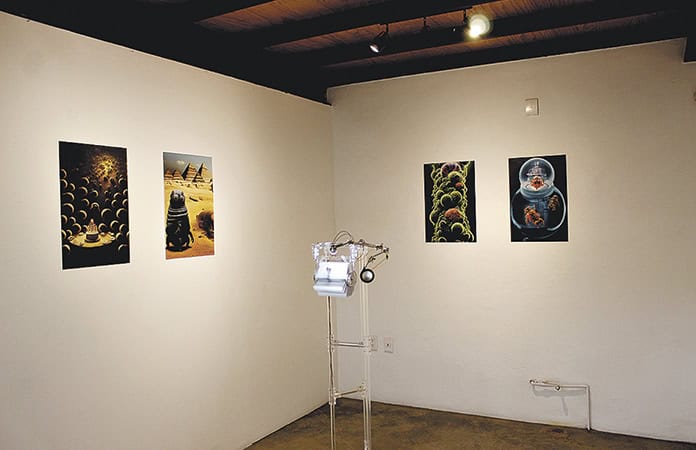
With the curatorial theme Archive of Feelings. A Journey, the exhibition brings together international artists exploring the relationship between emotions and technology through sound installations, video, XR environments and interactive works.
CYFEST is a nomadic festival founded in 2007 by independent artists and curators, who have built a global network bringing together creators, engineers, educators and programmers. Its 16th edition began in Yerevan, Armenia, continued in Mexico City and now arrives in San Luis Potosí, in collaboration with CYLAND MediaArtLab and the Frants Foundation.
A CRITICAL EXERCISE
On this occasion, the festival proposes examining how emotions are recorded, distorted or lost when translated into technological systems. Rather than a nostalgic look at the past or a utopian, futuristic vision, the collection offers a critical exercise: examining how memory is manipulated in a digitised present.
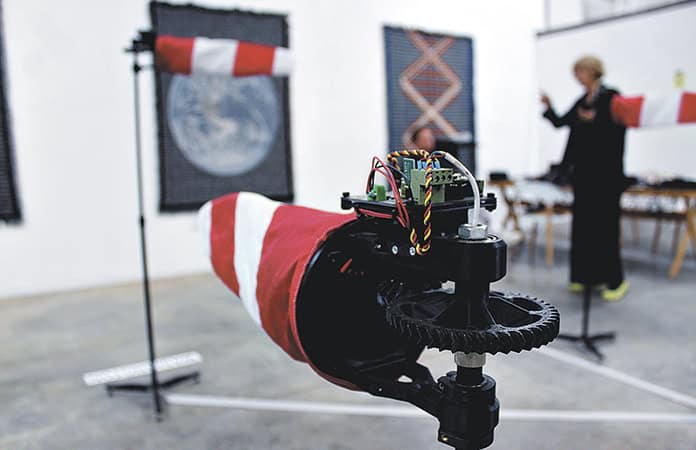
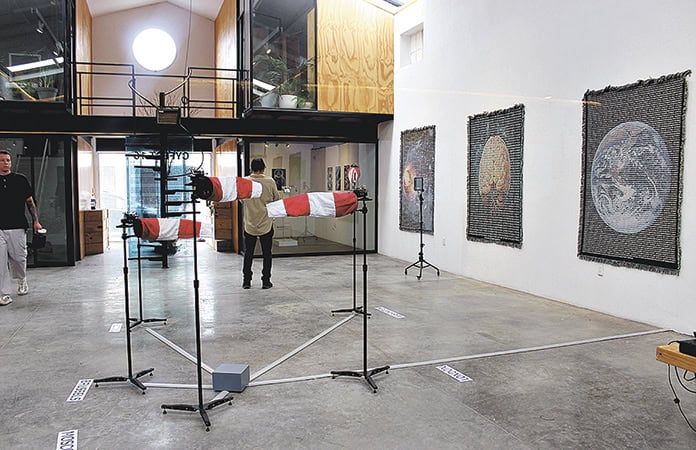
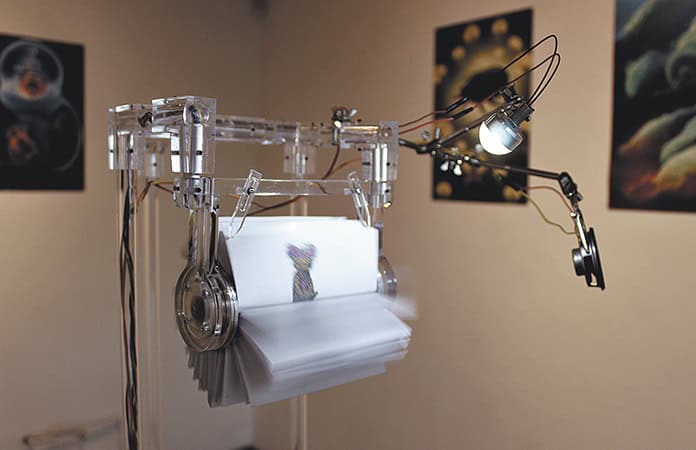
The selected works present different approaches to this dialogue. Simple Pleasures, by Anna Frants, uses a robotic system of flipbooks made from thousands of old photographs, reviving anonymous memories through kinetic movement. Wind of Changes, by Elena Gubanova and Ivan Govorkov, turns news headlines into air currents that move windsocks, a metaphor for the instability of truth in a world saturated with information.
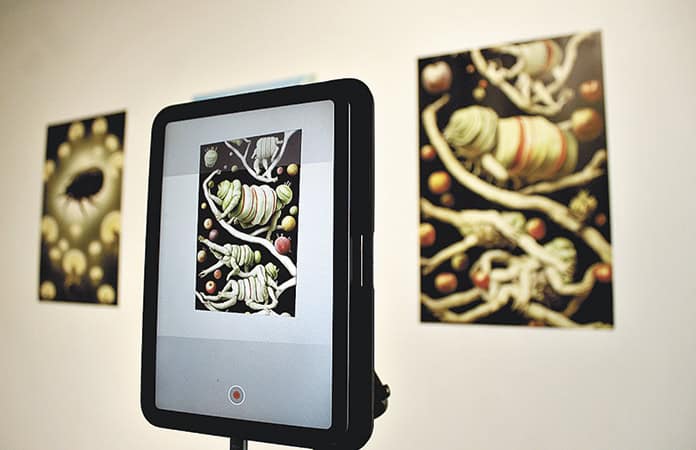
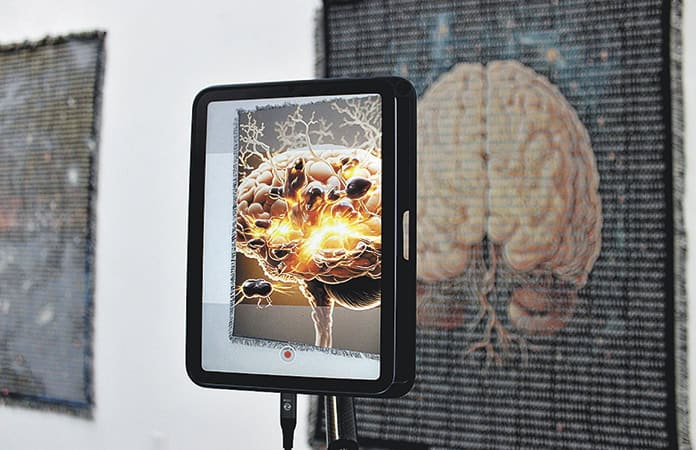
Alexandra Dementieva’s contribution stands out with The Missive, a tapestry woven in binary code that, when activated through augmented reality, reveals hidden layers and creates tension between tradition and technology. The same artist presents Planet Kquaan, a fictional universe inhabited by microscopic life forms created with artificial intelligence.
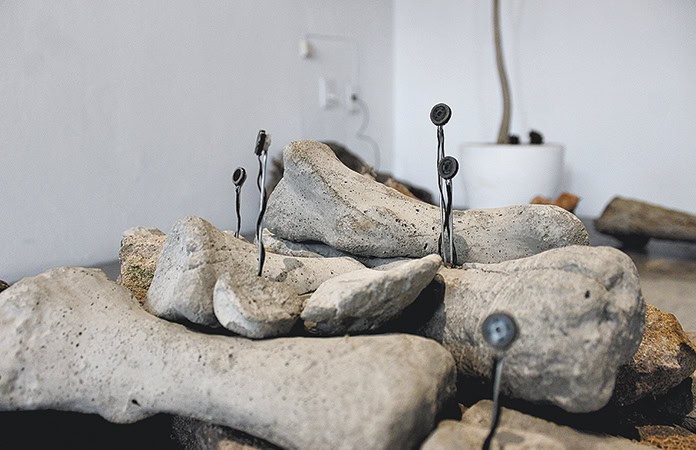
Meanwhile, Double Pendulum by Sergei Komarov and Lidiia Griaznova transforms the randomness of movement into sound, while Mesozoic by Anna Martynenko offers an acoustic journey that revives echoes of extinct beings. Alexander Terebenin contributes Horizon Line, a video installation that turns eroded walls into archives of urban memory, and Alexey Grachev exhibits Sense of Proportion, a minimalist piece that invites us to attend to the imperceptible.
A LIVING DIALOGUE BETWEEN ARTISTS AND SPACE
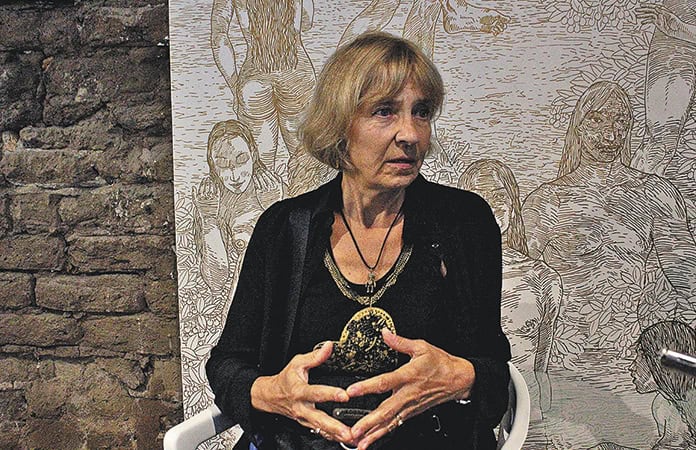
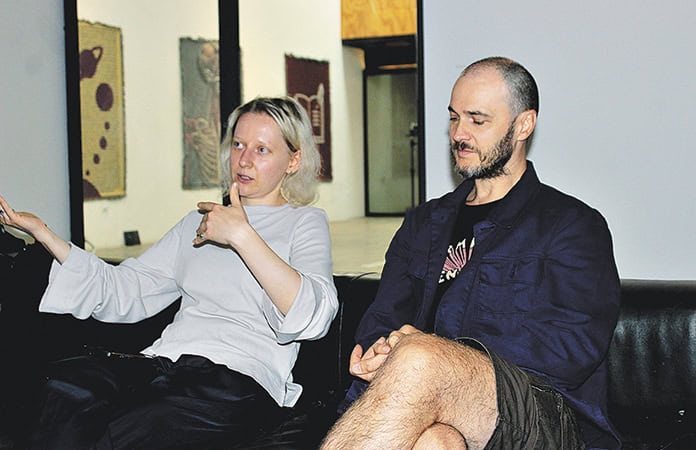
For Alexandra Dementieva, her work begins with a reflection on the continuity between traditional techniques and new tools. In an interview with this newspaper, the artist explains that tapestry was one of the first binary languages and that, by incorporating it into The Missive, she turns it into a time capsule for future intelligences. Her interest is in having these pieces, woven in code, transmit knowledge about the cosmos, the body or DNA as messages that could survive for thousands of years. Through augmented reality, she explains, she seeks to offer hidden narratives that expand the viewer’s experience and animate what appeared static.
The sound installation Double Pendulum, created by Sergei Komarov and Lidiia Griaznova, grew out of the gallery’s own architecture. Looking at photographs of the space, they considered how to activate its height and volume with sound. For both artists, the challenge of a nomadic festival such as CYFEST is to adapt each project to its host venue, so that the work enters into dialogue with its surroundings rather than imposing itself on them. “It is always about feeling the space more than reading about it,” they say of their creative process.
HUMANISING THE DIGITAL
Speaking about the meaning of the festival, Griaznova emphasises that technology is understood here not as a merely functional resource, but as a tool capable of expanding artistic language and humanising the digital. The idea of CYFEST, she adds, is to create encounters between works that can resonate with local audiences while also showing something unexpected, opening up possibilities for emotional connection.
Komarov stresses that this search lies at the root of the project: the intention is not to present technology as a finished product, but to explore its capacity to rethink human experience. For the artists, the festival also represents a living network of collaboration between engineers, scientists and creators, where the crossing of knowledge generates unpredictable but enriching processes.
THE LOCAL BRIDGE
In this sense, CYFEST’s arrival in San Luis Potosí reflects both the festival’s itinerant vocation and an interest in a space such as Aether, which supports bold proposals in dialogue with the desert and its identity. For the organisers, it is not simply a matter of exhibiting international works, but of placing them within a local context that also transforms the way they are perceived.
English translation of the original Spanish article.
Editorial note: the original article gives 1 October as the festival’s arrival date. The organiser’s published schedule lists the exhibition at Aether as 12 September–1 October 2025.
Photographs from the original publication