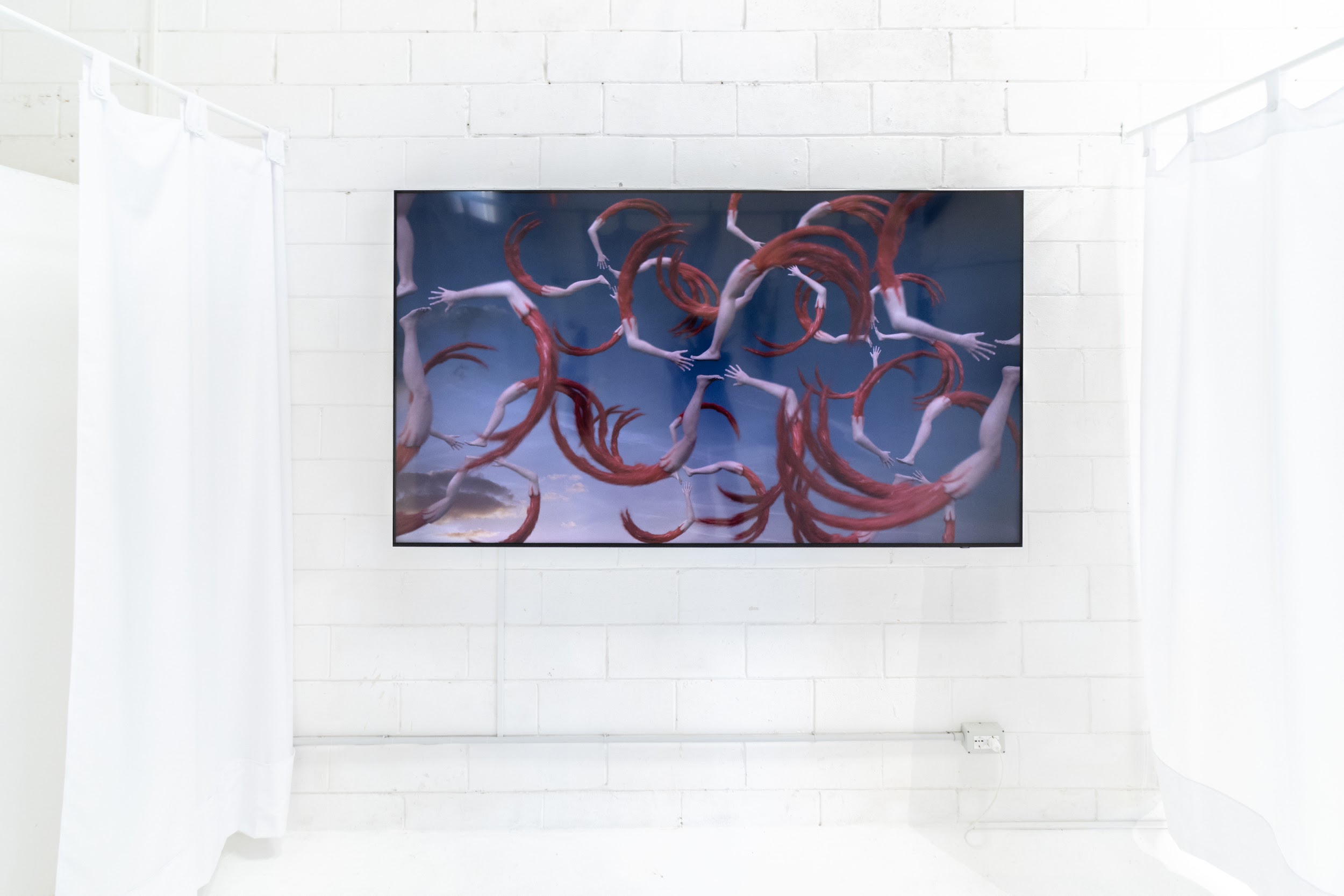
Until 31 August, CREA – Cantieri del Contemporaneo, on Venice’s Giudecca Island, is hosting the International Media Art Festival CYFEST 17, organised by the CYLAND Foundation in collaboration with Ca’ Foscari University of Venice, the Centre for Studies in Russian, Central Asian and Caucasian Art (CSAR), and Weave. Now in its seventeenth edition, the travelling media art festival, titled Natura Naturans: Human Beings, Nature, Landscape, investigates the multiple creative forces of technology as they emerge through a plurality of artistic expressions.
This pluralism is reflected in the works of more than twenty contemporary artists, presented in dialogue with early twentieth-century pieces from the Frants Collection. Moving from the earliest compositions and reflections on movement and kineticism, the exhibition traces a path shaped by a shared generative force: the same impulse that led artists to explore new forms of representation a century ago and that continues to inspire artistic innovation today.
CYLAND MediaArtLab was founded in 2007 by Frants Gallery. At the time of its creation, it was Russia’s only media art laboratory and residency; it later developed into an international platform dedicated to promoting new artistic forms. For this reason, the project seeks to bring together independent artists and curators interested in advancing new languages, presented through CYFEST’s annual exhibitions.
Following the exhibition in Thessaloniki, the Venice edition outlines a trajectory of research that identifies, in the first decades of the twentieth century and in the Russian avant-gardes, a strong interest in process and in the creation of new compositions. These themes can also be found in contemporary languages and in the possibilities offered by technology today. The exhibition further reflects on the possible — and increasingly probable — transformations of natural balances caused by technological development, addressing the climatic and conceptual urgencies of the present.
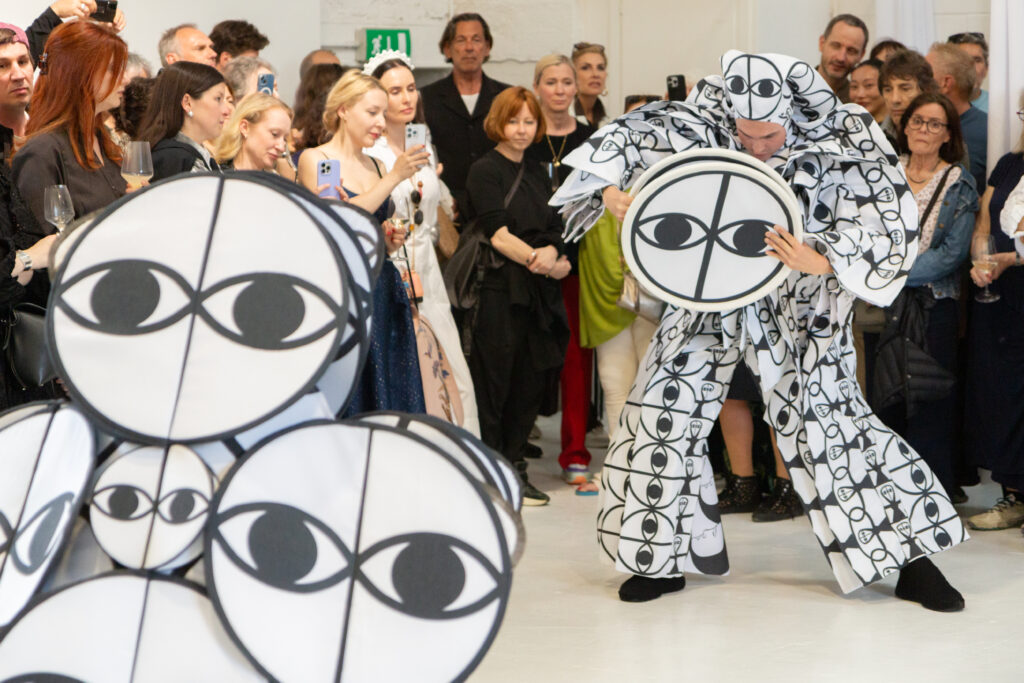
Andy Barrt, The Snow Flower of the North, sculptural performance. CYFEST 17, CREA Cantieri del Contemporaneo, Venice, Italy, 2026. Photograph: Anton Khlabov
One example is Tuula Närhinen’s installation, which speculates on possible avian forms developed from anatomical and naturalistic studies: new life forms capable of feeding on plastic waste. Jaanika Peerna, meanwhile, offers a reflection on the melting of glaciers. Installations by Mariateresa Sartori and Dmitriy Shishov place mechanical objectivity in relation to human or natural intervention, transforming energy into technological or visual outcomes.
The underlying energies are the same as those explored in the kinetic installations of Elena Gubanova and Ivan Govorkov, who revisit avant-garde experimentation through a contemporary lens. Anna Frants’s automated kinetic drawings evoke an early tradition of cinema, photography and movement, reinterpreted in a dystopian register. In a similar way, Natalia Lyakh’s investigations into light, sound and movement seek an archetypal connecting thread capable of uniting — through both understanding and control — all human beings.
Equally dystopian interpretations of reality come from the AES+F collective, which proposes a suspension of the real within an unsettling, fairy-tale-like natural environment transformed by digital technology.
CYFEST is not only a multifaceted investigation, but also a form of speculation rooted in a common origin. Its aim is to emphasise process and affirm the importance of relationships over the individual finished product. Through its collective nature and its gathering of multiple transdisciplinary perspectives, Natura Naturans: Human Beings, Nature, Landscape presents an intricate network of relationships and forces that interact with one another, with nature and with the public.
Whether or not one believes in Hartmann’s theories of energy nodes, Jung’s collective unconscious, or in the transmission of forms and energies across different eras, the exhibition’s central interest lies in revealing possible manifestations of these forces and placing them in relation to a use of technology that increasingly tends towards the dystopian.
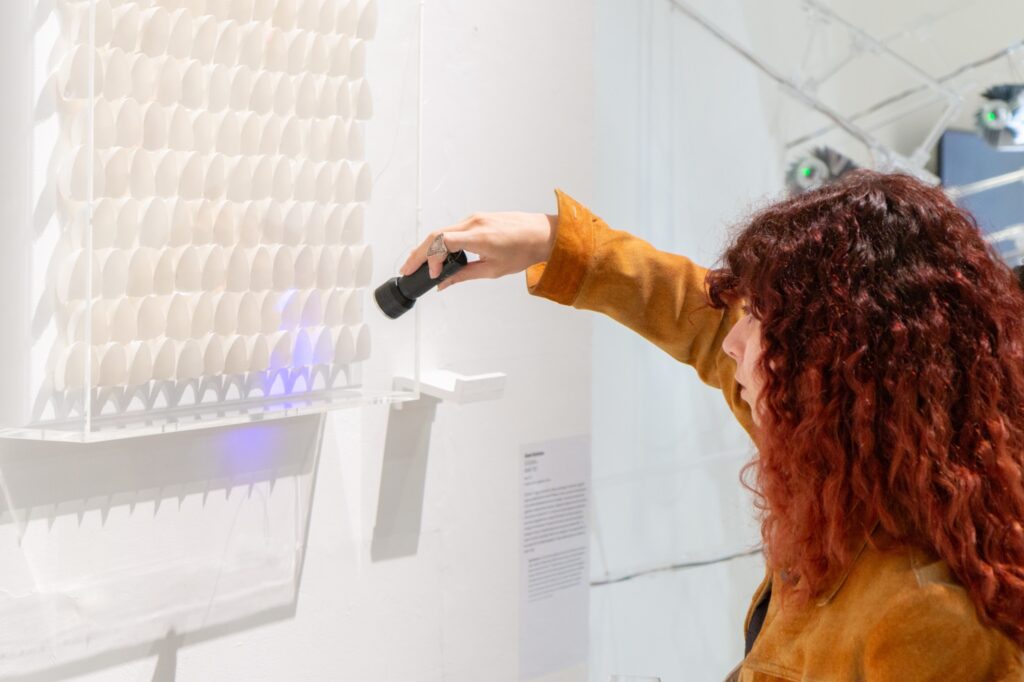
Alexei Kostroma, EGGSHELL NANO 163, 2017. CYFEST 17, CREA Cantieri del Contemporaneo, Venice, Italy, 2026. Photograph: Anton Khlabov
The exhibition confronts us with what comes afterwards, placing us before a present that already carries the flavour of the future and appears much closer than previously expected. On the occasion of the festival’s opening, Afterwards. Art in the Time of Change was presented in collaboration with the publishing house CURA. The publication examines the response of art to the accelerated evolution of technology.
Central to the project is the concept of uchronia, drawn from the theories of Charles Renouvier. Natura Naturans: Human Beings, Nature, Landscape presents an alternative reality, a fictional reconstruction positioned at the threshold of both past and present reality. Faced with these underlying energies connecting different times, spaces and modes of expression, what role will the artist play in the future that is already becoming our present?