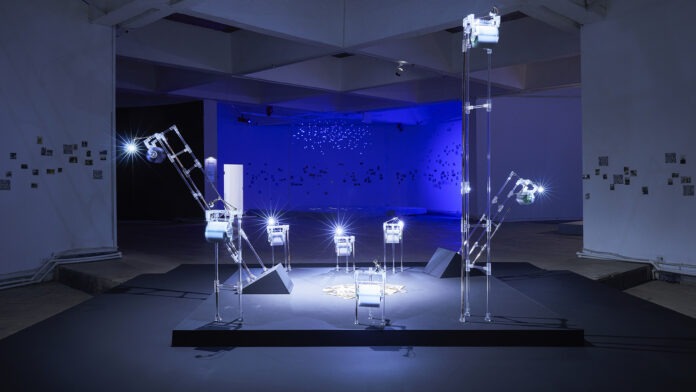
An interview with co-founder Anna Frants on the value of interdisciplinarity between art, science and technology as a driver of innovation
In the international landscape of media art, few projects can claim the continuity, global network, and ability to connect art, technology, and research developed by Anna Frants. A multimedia artist, curator, and co-founder of CYLAND MediaArtLab, Frants is also among the initiators of CYFEST, one of the longest-running and most internationally recognized festivals dedicated to media art.
Founded in 2007 and now in its seventeenth edition, CYFEST brings together artists, curators, engineers, programmers, researchers, and activists from around the world, fostering an ongoing dialogue between artistic languages, technological innovation, and critical reflection on contemporary change. The 17th edition, which began in Thessaloniki at the end of 2025, is now continuing in Venice with a program of performances, screenings, and talks, culminating in the exhibition “Natura Naturans: Human Beings, Nature, Landscape” at CREA Cantieri del Contemporaneo, on view until August 31, 2026.
In this conversation, we explored themes that run through the entire vision of CYLAND: the value of interdisciplinary contamination, the relationship between human beings, nature, and landscape, the role of art as an active principle within contemporary society, and the future prospects of media art in a world increasingly shaped by the interaction between creativity, science and technology.
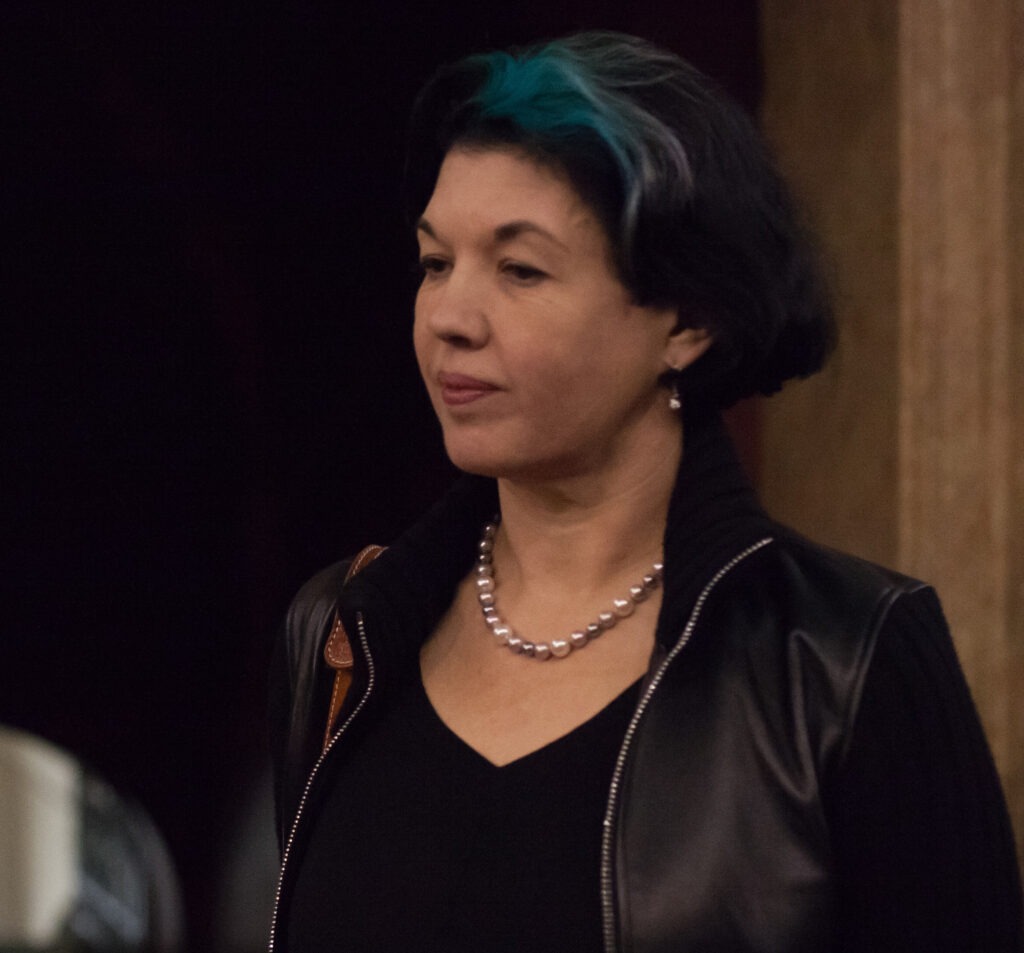
Anna Frants. Ph. Yurii Goryanoy
The Interview
Anna, for a top-tier festival like yours, built on networking and capable of bringing together artists, curators, engineers, and activists from all over the world, how important is cross-disciplinary contamination today, even between fields that may appear very distant from one another?
There are no strict boundaries between artistic disciplines. Painting, video, sound, performance, and digital technologies are all part of the same artistic continuum. Media art thrives on the interaction of these forms, making cross-disciplinary exchange essential. As an artist and curator, I’ve seen how collaboration – especially with engineers – drives innovation. Artists often bring unconventional perspectives, while engineers contribute technical expertise. Together, they can develop solutions that neither side would arrive at alone.
This process is highly iterative. An artwork evolves through experimentation, with technical and artistic decisions constantly influencing one another. Whether engineers need to fully understand the conceptual dimension of a project depends on the individual. Some are deeply engaged with the ideas behind the work, while others focus primarily on solving technical challenges. Interestingly, within the CYLAND team, some engineers have gradually become artists themselves. This shows that artistic thinking can be developed alongside technical skills, further blurring the boundaries between disciplines.
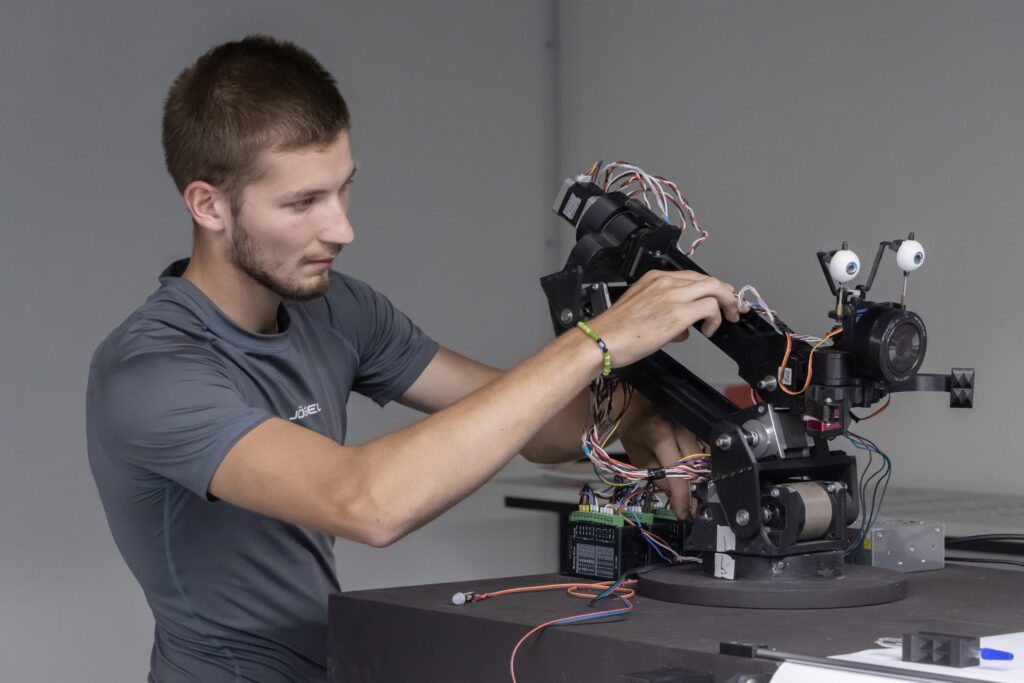
Anna Frants. Different Robot. 2025. Ph. Anton Khlabov
The title of the exhibition, “Natura Naturans: Human Beings, Nature, Landscape,” introduces three highly significant and timely key concepts. Is there a model you look to in your search for a balance between human beings, nature, and landscape?
Since ancient times, human beings have lived in a shifting relationship with nature and the landscape – sometimes in harmony, sometimes apart. Today, we find ourselves in a moment of disconnection and disharmony. Our works seek to restore a dialogue with the natural world, creating spaces where forgotten connections can be sensed, reimagined, and renewed. An artist isn’t just representing nature – they’re participating in its dynamism. A work of art isn’t a picture of nature; it’s a form in motion, an invitation to experience nature through the act of making and transforming.
We live in a time when nature is often reduced to a resource or a backdrop. Art can push back against that. It can remind us that we’re not external to nature – we’re part of it. And that art doesn’t imitate nature so much as it converses with it, revealing just how deep that connection goes.
Within this triad “Human Beings–Nature–Landscape” do you think the productive, corporate, and industrial world also has a cultural responsibility in relation to these balances today?
Today, the question is no longer whether the corporate world has a responsibility toward the balance between human beings, nature, and landscape, but how consciously it embraces that responsibility. Art can play an important role in this process. The most interesting developments emerge when these different perspectives enter into dialogue rather than remaining in separate spheres.
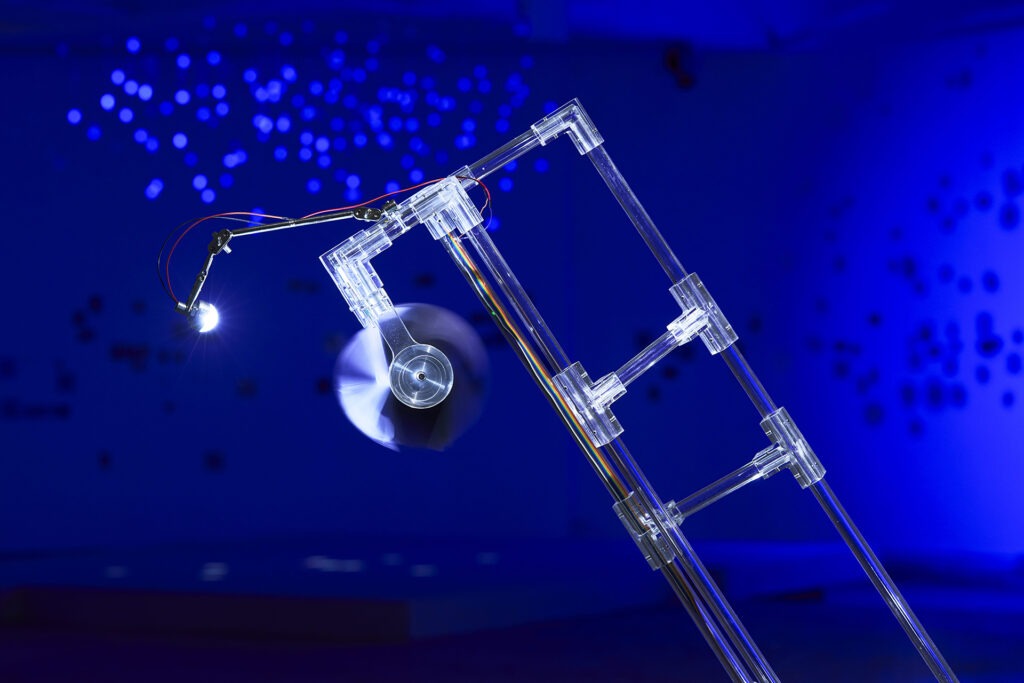
Anna Frants, To Make a Long Story Short, From Series Simple Joys, 2024, Installation. CYFEST 16, “HayArt” Centre, Yerevan, Armenia, 2024. Ph. Ann Prilutckaia
The thematic concept of the current festival edition states that art is conceived as an “active principle.” This is a very interesting definition: what does this idea mean for you in today’s context?
Art does not simply represent the world – it helps shape the way we understand it. Throughout the twentieth century, artists have responded to social, political, and technological change by developing new forms of expression and challenging established ways of thinking. Media art continues this tradition. It develops through the interaction of art, science, and technology, and it is constantly evolving as new tools and discoveries emerge. Rather than being defined by a single medium or style, media art is driven by experimentation and by the search for new ways of engaging with contemporary reality. In this sense, art is active because it creates new experiences, new forms of interaction, and new ways of seeing the world around us.
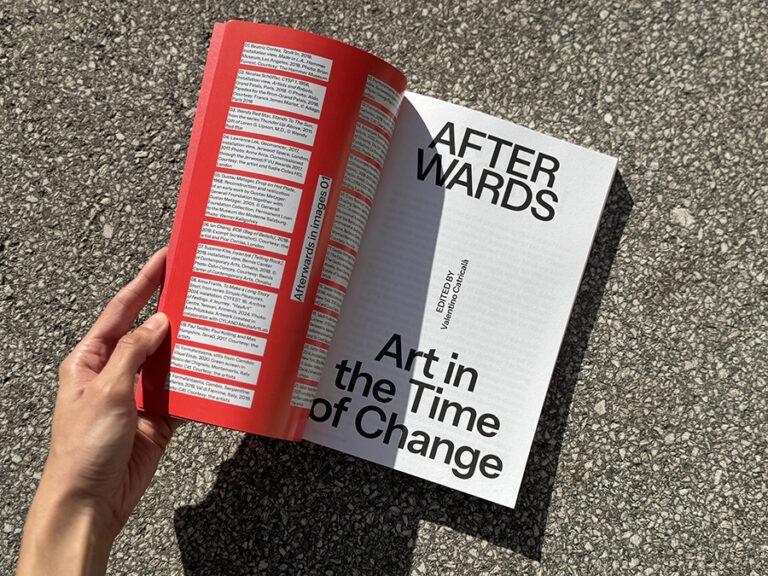
During the opening days of the festival, you presented the volume “Afterwards. Art in the Time of Change,” published by CURA and produced by the CYLAND Foundation, edited by Valentino Catricalà. The publication explores the role of art, science, and technology in our time through essays and interviews with international artists and thinkers. Did any shared insights or visions emerge from these reflections? Do you think there is a common denominator?
The book was originally conceived during the COVID-19 pandemic, a moment when many of us were forced to reconsider our relationship with technology, society, and one another.
A common denominator was the importance of maintaining a space for critical reflection. Another recurring theme was interconnectedness. The challenges we face today cannot be understood through a single discipline. Art, science, and technology increasingly overlap, and meaningful innovation often emerges from their dialogue. The publication reflects this conviction: although the contributors come from different backgrounds and perspectives, they share a belief that creativity, curiosity, and collaboration are essential for understanding the present and imagining possible futures.
Ph. Nevena Martinovic
Looking beyond the festival, the relationship between art and business today is increasingly moving beyond the traditional logic of sponsorship, taking on more holistic, project-based, cultural, and strategic forms. What is your position on these new forms of collaboration? What potential do you see in the dialogue between contemporary art, the humanities, and brands?
The relationship between art and business seems to be difficult. Media art is hard to sell; it would require more maintenance than pictorial art, therefore from the standpoint of the collector (it doesn’t matter if it is a private collector or a corporation) would require additional investment.
In this increasingly hybrid landscape, the figure of the artist is also constantly evolving. If we try to imagine the future: what strategic role or position could an artist take within a corporate board of directors?
Purely to help the new generation of artists if that is of interest. Otherwise, in my opinion, administrative roles interfere with being an artist.
From 2007 to today, CYLAND has collaborated with numerous foundations, universities, research centers, and internationally renowned institutions. Which partnerships do you consider most significant in your journey, and why?
We are considering the very special partnership Ca’ Foscari University of Venice and Professor Silvia Burini. Since 2011, we have collaborated on exhibitions, screening programs, publications, and research initiatives, building a long-term dialogue between media art and academia. Among the highlights are numerous CYFEST projects presented in Venice, as well as publishing initiatives such as Sostenibilart. Ambassadors of Sustainability (2022). Based on shared intellectual curiosity it remains one of the most meaningful and productive collaborations in CYLAND’s development.
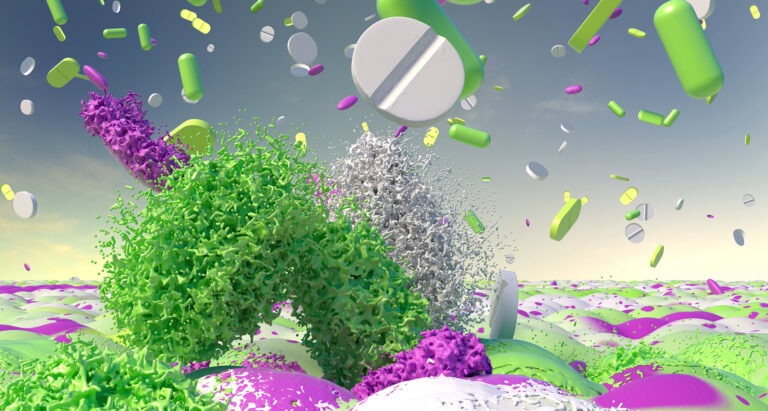
AES+F, Psychosis, Pills, 2017, still from 1-channel video © AES+F | ARS, New York
CYLAND defines itself as a “Media Art Lab”. In your opinion, what role will Media Art and digital artistic languages play in the art market and in art history in the coming years?
We define CYLAND as a Media Art Lab because media art exists in the crossings between mediums. It is created where technology, art, science, sound, image, performance, and communication intersect. The laboratory model reflects our commitment to experimentation, collaboration, and the exploration of new and old forms that emerge from these intersections.
What qualities do you look for today in artists and projects that you consider truly relevant in the contemporary Media Art landscape?
Art comes first, technology is a medium. From an artistic perspective, I believe new themes in art don’t truly exist; rather, new materials and digital tools are added, providing fresh possibilities for expression. The core idea or “message” the artist wants to convey is paramount. The chosen medium serves that purpose and adds new expressive possibilities, with technical details often based on what is “at hand” or accessible. It’s often “an old idea, new medium”.
Ultimately, for me, the viewer is always an integral part of the artwork. A piece of art should resonate with the audience, eliciting emotions and associations, mentally affect the viewer. I personally am not a strong advocate for extensive accompanying texts, as I believe the main impact should be emotional, though I acknowledge that viewer preferences vary greatly across cultures and individuals.
What projects and future perspectives do you envision for CYLAND and CYFEST?
We would like to continue to travel the world. Latin America is a special interest for us now.