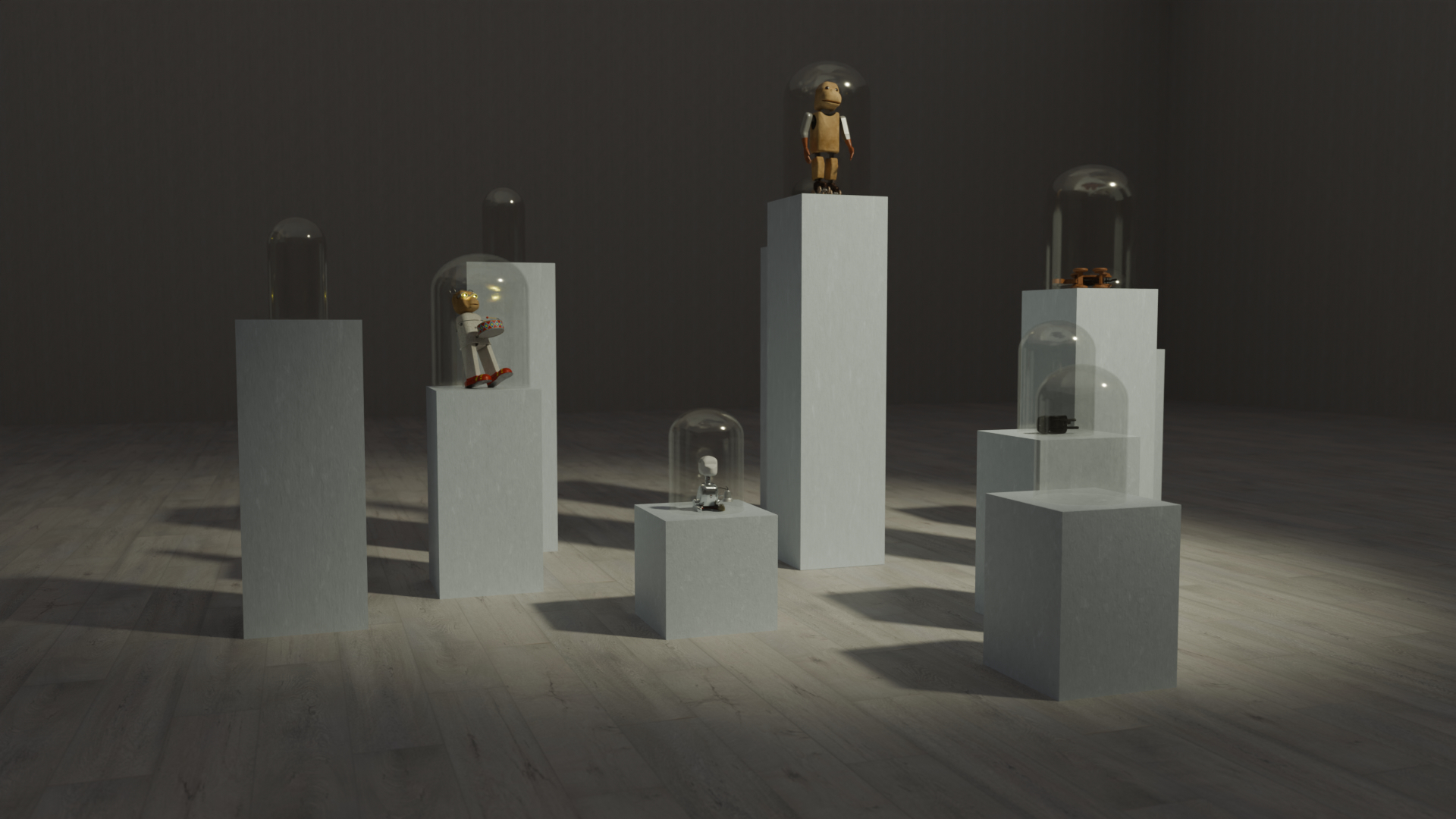
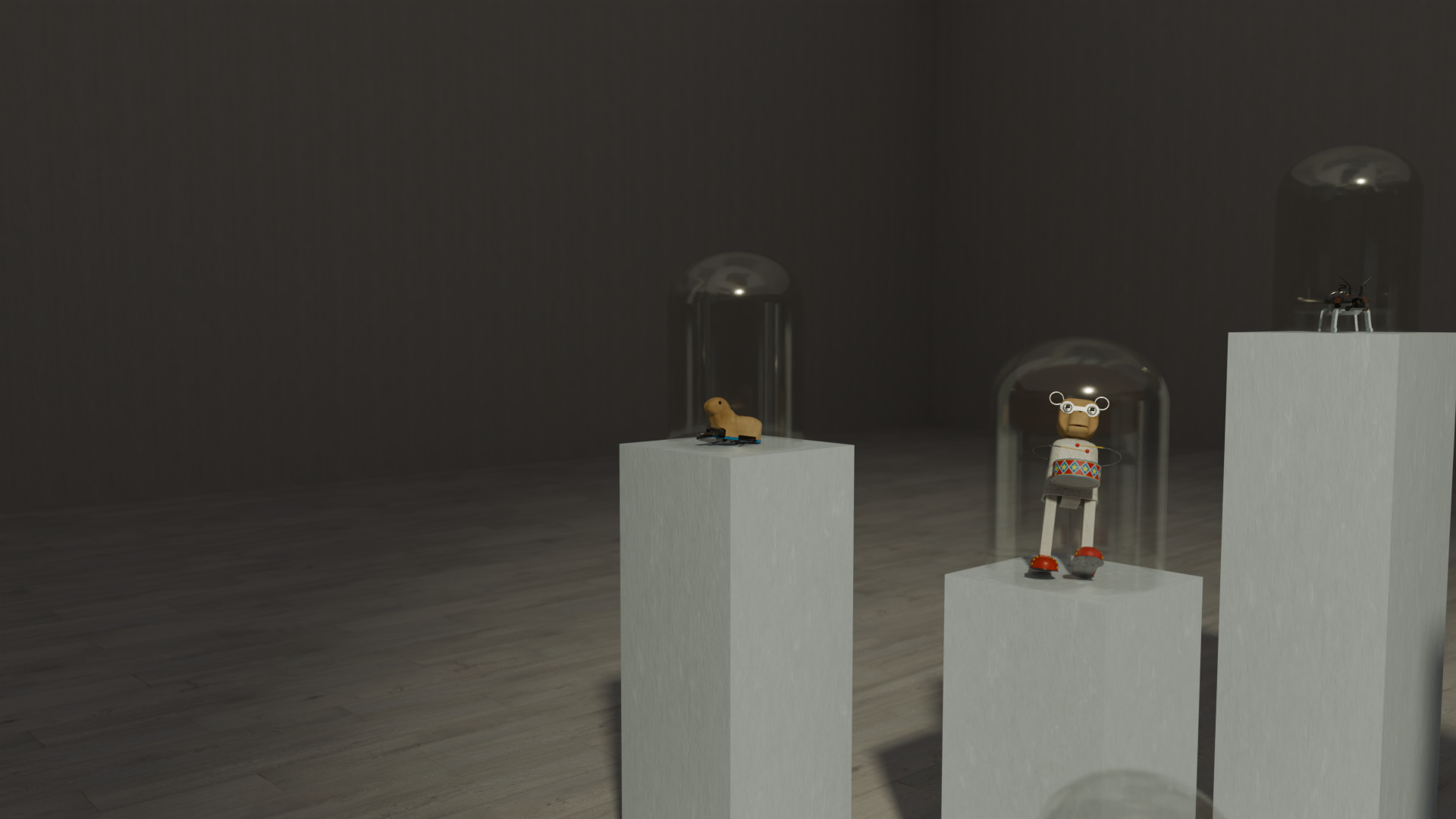
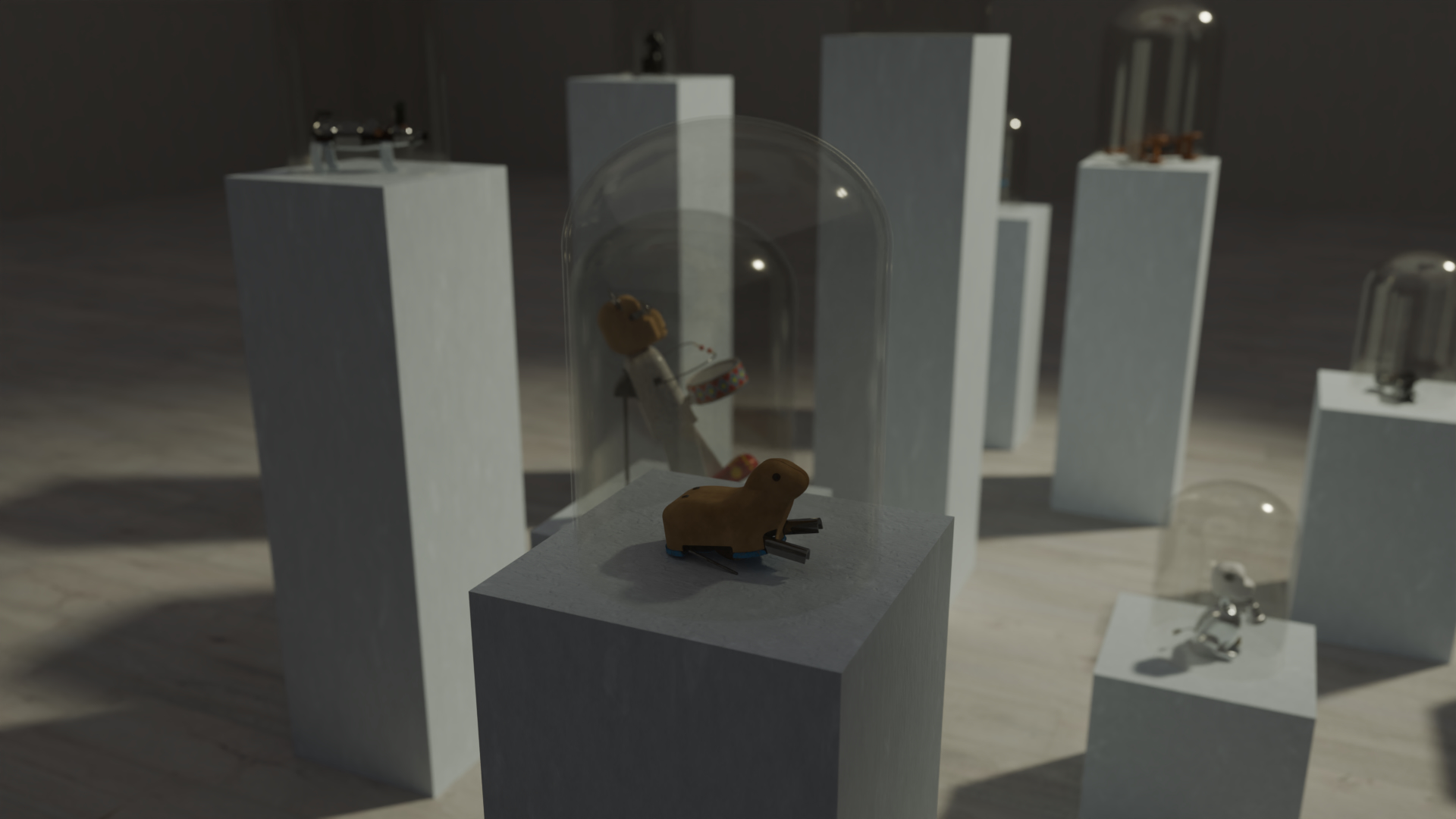
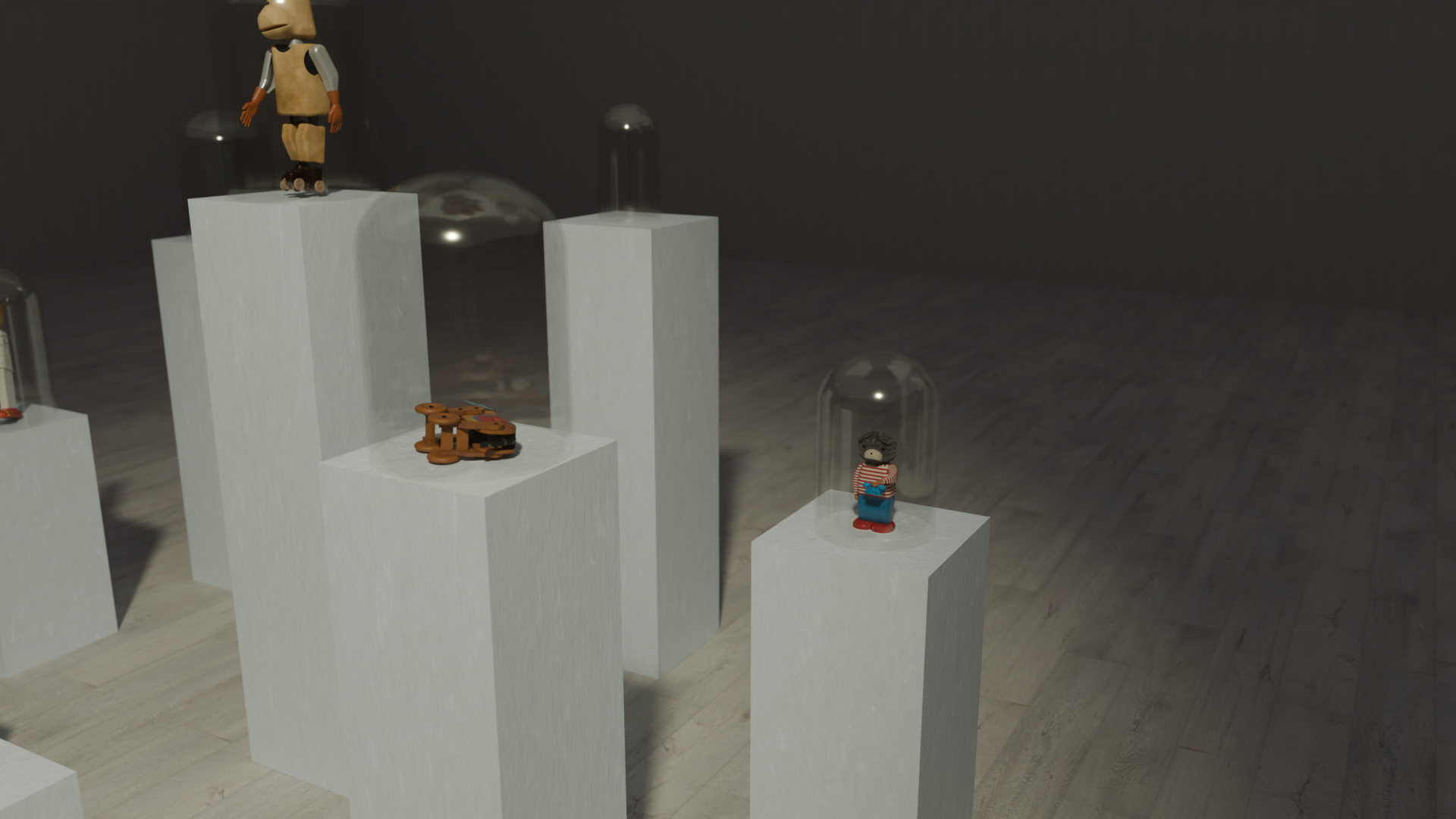
In War Has No Winners, it gathers old Japanese mechanical toys—stripped of their painted skins and left nearly bare. Many of these postwar toys were originally made from recycled tin cans, humble material reshaped into play.
Time appears not as a sequence of events but as material exhaustion. The mechanical toys—stripped, exposed, and barely moving—embody a temporality that has already been spent. Their repetitive gestures do not lead forward; they persist as remnants. Here, war leaves no narrative of victory, only matter exhausted by time.
Their springs twitch, their gestures repeat without strength, their mechanisms exposed.
The recycled tin carries its own memory—of scarcity, of rebuilding, of economies born from the aftermath, reveling in both the inner gears and the historical layers embedded in the material itself.
In the end, the work leaves us with a simple truth: when the spring unwinds, all movement—winner and loser alike—comes to rest.
Anna Frants and CYLAND Medialab
Old Japanese mechanical toys, electronics, and programming.